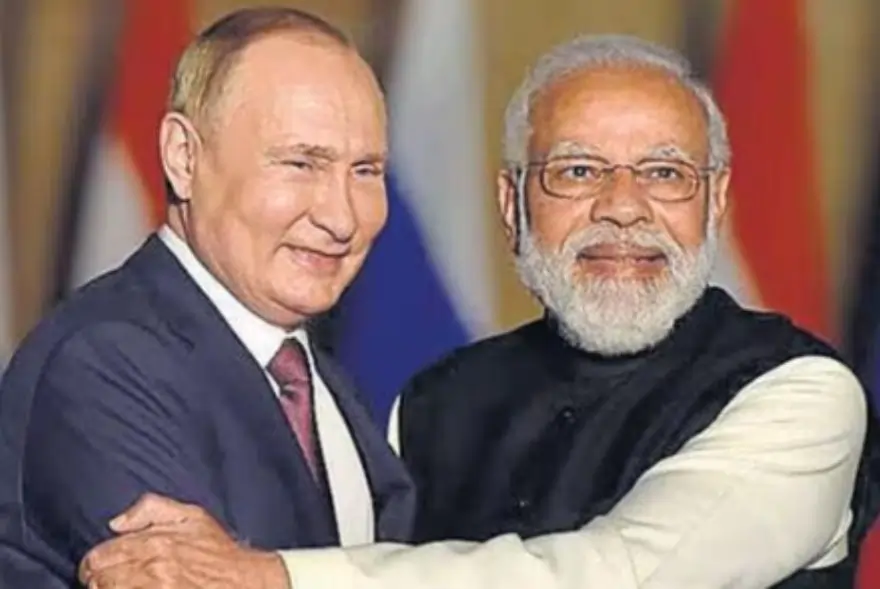
Putin’s India Visit brings major discussions on oil trade, defence deals and global geopolitics as Vladimir Putin meets PM Modi in Delhi.
Putin’s India Visit has become one of the most important international events of the week, as Russian President Vladimir Putin lands in Delhi for a two-day trip to meet Prime Minister Narendra Modi. Both leaders share a friendly bond, and this visit comes at a time when global politics is changing fast, with pressure from the US and Europe growing.
India and Russia have been close partners for decades, and this relationship has stayed strong even in difficult times. Today, India is one of the fastest-growing major economies, and its huge market makes it important for Russia. Oil is a big part of their current connection, especially after India increased Russian oil purchases over the last two years. But with the US raising tariffs on India for buying Russian oil, New Delhi has reduced orders, making this meeting even more crucial.
Russia wants India to keep buying its oil and also hopes to sell modern defence equipment. For many years, India has depended on Russian jets, missiles and defence systems. Even today, some of India’s most important air force machines are Russian-made. Delhi is now exploring the possibility of buying advanced systems like the S-500 and Su-57 fighter jets, especially as neighbouring countries upgrade their own defence technology.
For Prime Minister Modi, this visit is a major test of his strategy called “strategic autonomy.” India wants to stay friendly with Russia while also keeping strong ties with the US and Europe. But ever since the US President Donald Trump raised tariffs, India-US relations have become tense. At the same time, European countries have openly criticised Russia’s actions, putting Modi in a delicate balancing position.

Another major topic between India and Russia is trade balance. India’s imports from Russia—especially oil—are very high, but its exports to Russia remain low. Modi wants Indian products like smartphones, shrimp, garments and electronics to gain a stronger place in the Russian market. Both countries are expected to discuss ways to reduce dependence on oil and defence alone.
This meeting will also be closely watched by the world because it shows how global alliances are shifting. For Russia, travelling to India proves that it still has strong partners despite the Ukraine war. For India, welcoming Putin sends a message that it will continue to decide its foreign policy independently, without bowing to pressure.
Analysts believe that even if this visit brings only a modest outcome, it will help protect India’s oil supply and defence cooperation. But if the talks succeed in a bigger way, it could reshape trade connections and create a new economic path between the two countries in the coming years.