
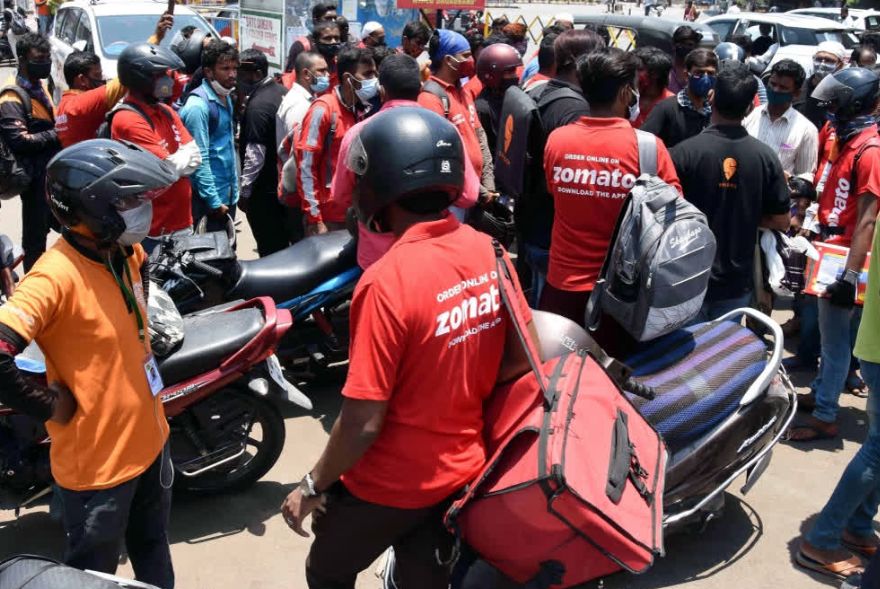
Food delivery platforms like Zomato and Swiggy have hiked payouts and incentives for delivery agents to keep services running
Major food delivery platforms including Zomato and Swiggy have announced significant increases in payouts and incentives for delivery partners amid mounting pressure and a strike call by gig worker unions on New Years eve.
Zomato is offering increased per-order payouts ranging from Rs 120 to Rs 150 during peak evening hours (6 pm–12 am) on New Year’s Eve. Delivery partners could also earn up to Rs 3,000 over the course of the day, depending on order volumes and availability.
In an effort to support earnings stability, the company has temporarily waived penalties on order denials and cancellations.
Swiggy on the other hand has expanded its incentive programme, advertising potential earnings of up to Rs 10,000 across December 31 and January 1, with peak-hour pay of up to Rs 2,000 for riders working between 6 pm and midnight on New Year’s Eve.

These payout increases come at a time when gig worker unions have called for nationwide strike action, citing concerns over low pay, lack of social security, long working hours, and unsafe working conditions.
Union leaders claim that lakhs of delivery partners could participate in protests that might disrupt services for food delivery and quick-commerce platforms such as Zomato, Swiggy, Blinkit, Instamart, and Zepto.
Industry insiders describe higher payout incentives as part of a routine festive and peak-season strategy, but workers and union representatives argue that such measures are reactive and fail to address longer-term issues of fair compensation and labour rights.
The timing of the hike — on New Year’s Eve, traditionally a peak in consumer orders — reflects platforms’ desire to ensure service continuity and retain delivery agents during heightened demand, especially amid labor unrest.
Background — Strike and Worker Demands:
Gig workers have demanded not only an overhaul of pay structures but also improved workplace conditions. Several unions have specifically called for the removal of stringent delivery time options believed to increase on-road pressure and risk for riders, along with guarantees on minimum earnings and social security protections.
Industry Reaction:
While the payout boosts are framed as standard incentives tied to seasonal demand, delivery agents and union leaders see them as a short-term band-aid that highlights the broader challenges faced by gig workers in the online delivery economy.
Also read: Foreign Tourist Numbers at Kaziranga Jump 127% in Three Years, Says CM Himanta Biswa Sarma