
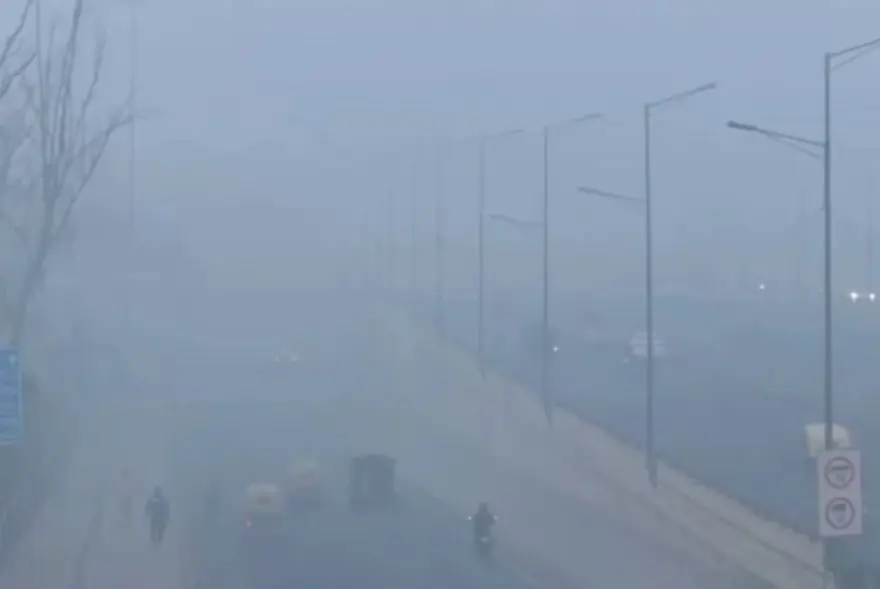
Schools across Delhi have shifted to hybrid classes for students as a result of the smog and spiking pollution levels
Dense smog continues to choke the Delhi and National Capital Region (NCR), with air quality plunging to some of the worst levels this winter as Delhites woke up to a thick layer of smog on Sunday (Dec 14) morning as the air quality lingered in the ‘severe’ category.
Readings from multiple monitoring stations show the Air Quality Index (AQI) climbing well into the hazardous zone, with several areas near or above 400–450 AQI — far beyond safe limits.
Several areas in Delhi also reported low visibility due to smog.
According to the Central Pollution Control Board (CPCB), an AQI within 0-50 is considered good, 51-100 is satisfactory, 101-200 is said to be moderate, while AQI between 201-300 is said to be poor, 301-400 very poor, and between 401-500 is severe.

The Commission for Air Quality Management (CAQM) has activated Stage-IV of the Graded Response Action Plan (GRAP) — the most stringent pollution control phase — restricting high-polluting vehicles, halting construction activities, and limiting outdoor burning.
Morning fog and cold, stagnant air combined with emissions from traffic, industry and crop burning in surrounding States to trap pollutants near the ground, creating a thick layer of smog that reduces visibility and aggravates health risks for residents.
Meanwhile, schools across Delhi shifted to hybrid classes for students of Class 1-9 and Class 11 with immediate effect under GRAP Stage -IV.
On the other hand, people across Delhi-NCR are reporting eye irritation, breathing difficulties following the heavy smog that has blanketed the national capital and its surrounding areas.
In some parts of the city, visibility has dropped sharply, interfering with morning commutes and prompting health advisories.
Also Read : DGCA removes four officials responsible for overseeing IndiGo operations