
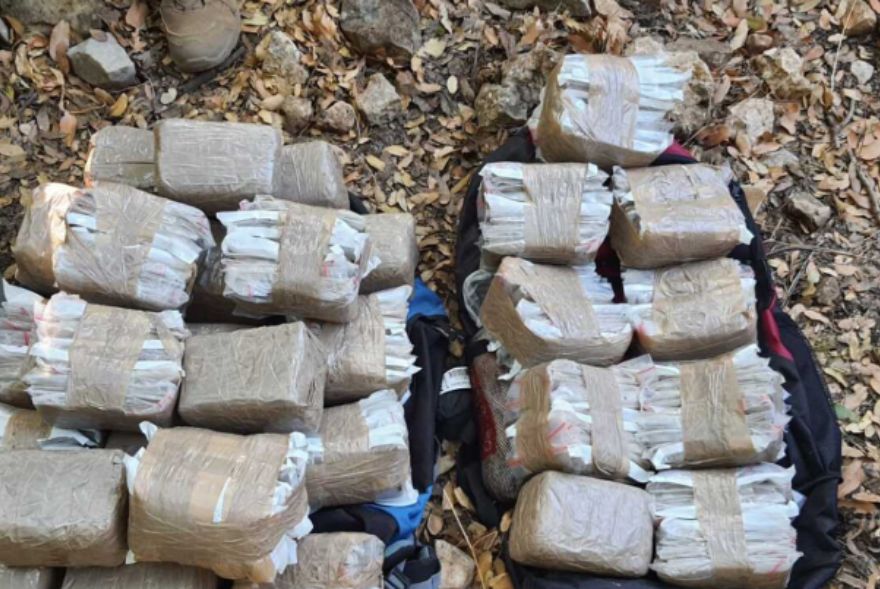
These networks operate in tandem with transnational smuggling groups in Myanmar, making the Northeast one of India’s most vulnerable drug corridors
In a major breakthrough in the fight against drug trafficking, Itanagar Capital Police on Sunday arrested a drug peddler hailing from Bihar in Itanagar.
Acting on credible intelligence, a special team intercepted Md. Anitullah, a native of Rampur in Bihar’s East Champaran district, currently residing in the capital.
Police recovered 94 plastic vials containing heroin, weighing around 14 grams, from his possession. A case has been registered at the Itanagar Police Station under relevant sections of the NDPS Act.
While this arrest is significant, it also reflects a larger pattern across the Northeast, where individuals from several mainland Indian states, particularly Bihar, Uttar Pradesh, Punjab, West Bengal, and Delhi, have increasingly become active in narcotics distribution networks.

These networks operate in tandem with transnational smuggling groups in Myanmar, making the Northeast one of India’s most vulnerable drug corridors.
A Growing Trend: Mainland Traffickers in the Northeast
Multiple long-term studies and law enforcement data from 2007 to 2023 have shown a consistent trend: a significant number of arrested “non-local” traffickers in border states such as Manipur and Mizoram originate from states like Assam, Bihar, Uttar Pradesh, Punjab, Rajasthan, Delhi, Tamil Nadu, and West Bengal.
These individuals are often recruited by larger drug syndicates to transport heroin and methamphetamine from Myanmar, move consignments through Assam towards major Indian metros or distribute narcotics in urban centres across the Northeast.
The recent arrest in Itanagar mirrors similar developments across the region in recent weeks, where several major seizures have drawn national attention.
Guwahati: A Hub Exposing Interstate Links
Guwahati appears to be fast emerging as the hub of drugs and a favourite transit route.
On December 7, Guwahati Police seized 40 kilograms of cannabis from the Inter-State Bus Terminal (ISBT) in Garchuk. The arrested accused, Amit Ram, hails from Ghaziabad, Uttar Pradesh, and was allegedly transporting the contraband for delivery to mainland buyers.
Just a day earlier, a dramatic operation in Hatigaon led to the arrest of Sajju Rahman from Cachar district, with Guwahati Police recovering seven packets of heroin valued at several lakhs. A subsequent raid at a nearby hotel yielded 29 more packets, taking the total value to a staggering Rs 3.5 crore.
Police sources say these cases highlight the dual role played by mainland traffickers, some come directly to the Northeast to pick up consignments, while others embed themselves locally to maintain steady supply lines.
Cross-Border Syndicates Tighten Grip
On December 2, the Narcotics Control Bureau (NCB) in Guwahati busted an international drug network operating across Myanmar–Manipur–Assam, seizing 6.149 kg of heroin. In a striking revelation, officers found traffickers had begun using motorboats along the Barak River to evade highway surveillance, an indication of how quickly smuggling techniques are evolving.
Similarly, on November 23, Assam Rifles recovered 186 grams of high-grade heroin worth around Rs 2.5 crore in Cachar district, once again pointing to Manipur-origin heroin entering Assam.
The Golden Triangle Connection
Most narcotics entering Northeast India originate in Myanmar, a key node in the Golden Triangle (Myanmar–Laos–Thailand). The region’s 1,643 km porous India–Myanmar border, combined with challenging terrain and insurgent presence, continues to enable large-scale smuggling.
Apart from heroin, methamphetamine tablets, popularly known as “yaba” or “WY pills”, have seen a dramatic surge. Syndicates often depend on mainland Indians to transport these high-value drugs to metros like Delhi, Kolkata, Lucknow, Patna, and Chandigarh.
Interestingly, a reverse flow has also been documented: precursor chemicals and pharmaceuticals from Indian states make their way into Myanmar’s illicit drug labs.
Record-Breaking DRI Seizures in 2024–25
The Directorate of Revenue Intelligence (DRI) has intensified operations across the Northeast, seizing:
• 231 kg methamphetamine tablets
• 16 kg heroin
• 1,375 kg ganja
• 3.7 kg hydroponic weed
• 32 vehicles used in trafficking
A total of 70 traffickers, including seven women, have been arrested in the ongoing financial year.
In just two days this January, 26 kg of methamphetamine worth Rs 26 crore was seized from a truck at Dwarband Bazar, Cachar and 6 kg of meth tablets were seized from another truck near Agartala, Tripura.
The involvement of traffickers from various mainland states in these consignments underscores the widening footprint of interstate networks.
A Dangerous New Trend: Hydroponic Weed via Air Routes
Authorities have also flagged an emerging pattern: hydroponic marijuana, grown in controlled environments rather than soil, is now being smuggled into the Northeast by air passengers. This marks a shift from traditional cultivation-based cannabis to more potent commercial-grade variants.
Why Mainland Traffickers Are Increasingly Present?
Officials cite several reasons:
• Established transport links from Assam to rest of India
• Potential for higher profits outside the Northeast
• Syndicates seeking low-profile couriers unfamiliar to local police
• Urban anonymity in cities like Itanagar, Guwahati, Shillong, and Silchar
Many traffickers from Bihar, UP, Punjab, and Bengal allegedly work as paid carriers, drivers, or logistical handlers for larger cartels.
A Region Under Pressure
The arrest of the Bihar-origin trafficker in Itanagar is not an isolated event, it is part of a broader and rapidly evolving narcotics landscape where mainland criminal networks and Myanmar-based syndicates are increasingly intertwined.
As enforcement agencies intensify crackdowns, traffickers continue to innovate new routes and concealment techniques. With rising heroin and methamphetamine inflows, the Northeast remains both a gateway and a battleground in India’s fight against drug trafficking.